भदौ २३, २०८२
आजको युवा (Gen-z) हरुको राज्यको व्यातिथिको विरोधमा प्रदर्शनमा ज्यान गुमाएका युवाप्रति हार्दिक श्रद्धाञ्जली अर्पण गर्दछु, र घाइते सबैको शीघ्र स्वास्थ्य लाभको कामना गर्दछु। शान्तिपूर्ण आन्दोलनमा सहभागी युवामाथि राज्यद्वारा गरिएको कठोर र बर्बरतापूर्ण दमन; जसमा दर्जनौँ युवाको मृत्यु र सयौँ घाइते भएकोप्रति गम्भीर खेद व्यक्त गर्दै कडा भर्त्सना गर्दछु। त्यस्तै, शान्तिपूर्ण आन्दोलनलाई विचलित पार्न घुसपैठ गरेर अराजकता र हिंसा उक्साउने तत्वहरू र तिनलाई उक्साउने राजनीतिक पक्षप्रति पनि समानरूपमा निन्दा गर्दछु। यो केवल एक आन्दोलन होइन; राष्ट्रको भविष्य र अस्तित्वसँग जोडिएको ऐतिहासिक मोड हो र सबै पक्षलाई सोहि अनुसार युवाको आवाजलाई गम्भीर रुपमा लिन र व्यवहार गर्न आग्रह गर्दछु। ।
पृष्ठभूमि
नेपालको पछिल्लो सय वर्षको यात्रामा राजनीतिक व्यवस्था परिवर्तनका धेरै चरण आएका छन्। राणाकालको अन्त्य (२००७ साल) पछिको प्रजातान्त्रिक उद्घाटन, त्यसपछिको अस्थिरता, पञ्चायती शासन, पुनःस्थापित बहुदलीय प्रजातन्त्र (२०४६ साल), सशस्त्र द्वन्द्व र शान्ति प्रक्रिया (२०५२–२०६३), गणतन्त्र स्थापनादेखि संघीय संविधान (२०७२) लागू हुनेसम्म। तर यी रूपान्तरणहरू अपेक्षित सामाजिक–आर्थिक उन्नतिमा रूपान्तरित हुन नसक्दा नागरिक, विशेषतः युवापुस्ता, क्रमशः निराशाभन्दा आक्रोशतर्फ धकेलिँदै आए।
पञ्चायती काल – विशेषगरी राजा महेन्द्रको शासनकालमा राज्य – योजनाबद्ध दिगो विकास र आत्मनिर्भरता उन्मुख केही दीर्घकालीन पहलले आधुनिकीकरणको आधार तयार गरे। दैनिक जीवन र आत्मनिर्भरतासँग प्रत्यक्ष जोडिएका कृषि, औद्योगिक र सेवा संस्थाहरू क्रमशः स्थापना भए। कृषि सामग्री आपूर्ति संस्थान र कृषि विकास बैंक जस्ता संस्थाले बीऊ, मल, सिंचाइ–सामग्री र कर्जा पहुँच बढाए। नेपाल खाद्य संस्थानले खाद्य सुरक्षा र मूल्य–स्थिरीकरणमा भूमिका खेले। साझा यातायात, राष्ट्रिय वाणिज्य बैंक, राष्ट्रिय बिमा/व्यापारिक संस्थानहरू, नेसनल ट्रेडिङ् र साल्ट ट्रेडिङ्ले आपूर्ति शृंखला स्थिर राखे। नेपाल वायुसेवा निगमले आन्तरिक–बाह्य पहुँच बढायो। हेतौडा र बलाजु औद्योगिक क्षेत्रहरूले उत्पादन–आधारित रोजगारी विस्तार गरे। बिरगञ्ज चिनी कारखाना, बिराटनगर जूट मिल, हेतौडा टेक्सटाइल (कपडा), बानसबारी लेदर एण्ड सु–फ्याक्ट्री (छाला/जुत्ता), गोरखकाली रबर उद्योग, जनक शिक्षा सामग्री केन्द्र जस्ता कपडा–जुत्ता–टायर–कृषि–शिक्षा–आपूर्तिसँग प्रत्यक्ष सम्बन्धित उद्योग/संस्थाहरूले आम जनजीवन र आत्मनिर्भरता बलियो बनाउने सम्भावना देखाए। यातायात पूर्वाधारमा विद्युतीय ट्रलीबस, ढोरसिङ–काठमाडौँ कार्गो रोपवे र हेतौडा–काठमाडौँ रोपवे जस्ता समाधानले भूगोल अनुकूल, पर्यावरणमैत्री दिगो सोच सहितको पहुँचको नमूना प्रस्तुत गरे।
तर २०४६ सालपछि पुनर्स्थापित बहुदलीय प्रणालीबाट अपेक्षित सुशासन र दीर्घकालीन रणनीतिक दृष्टि नआएपछि नीति–निरन्तरताको अभाव, संस्थागत दुरुपयोग, अप्रगतशील निजीकरण, राजनीतिक हस्तक्षेप र व्यापक भ्रष्टाचार हावी भए। उत्पादनमूलक धेरै सार्वजनिक उद्योगहरू सुधारमार्गबाट होइन, अव्यवस्थित निजीकरण/अस्वस्थ प्रतिस्पर्धा र नीति–निरन्तरताको अभावका कारण थला परे; कृषि–उद्योग–सेवामा घरेलु उत्पादनलाई प्राथमिकता दिने नीति कमजोर हुँदै गयो, र देश आयात–निर्भर अर्थतन्त्रतर्फ उन्मुख भयो।
शिक्षा प्रणाली व्यावहारिक र रोजगारी–उन्मुख हुन नसक्दा र स्वास्थ्य सेवा ग्रामीणमा कमजोर तथा शहरीमा महँगो/अव्यवस्थित रहँदा सामाजिक असमानता बढ्यो। उत्पादक उमेरका समुहका युवाहरू उच्च शिक्षा वा रोजगारीका लागि विदेशिन बाध्य भए। यसले परिवार विछोड, सामाजिक असन्तुलन र पूँजी/सीप पलायनलाई तीव्र बनायो। उता, कृषि मूल्य–शृङ्खला, बजार व्यवस्थापन र स्थानीय उत्पादनको संरक्षण कमजोर हुँदा नेपालमै उपलब्ध वस्तुमा पनि आयातको प्रभुत्व बढ्दै गयो। यो प्रवृत्तिले किसान, घरेलु उद्योग र साना उद्यमीको मनोबल घटायो।
यिनै दीर्घकालीन संरचनागत कमजोरीहरूको जगमा आजको युवाआन्दोलन प्रस्फुटित भएको हो। हालको सामाजिक सञ्जाल प्रतिबन्ध त केवल चिङ्गारी हो। शुशासन, पारदर्शिता, संस्थागत स्वायत्तता र स्थानीय उत्पादनलाई प्राथमिकता दिने आर्थिक नीतिको अभाव ‘मूल समस्या’ हो। आज सडकमा प्रतिविम्बित आक्रोश, वास्तवमा, विगत शताब्दीभरका विकृतिका विरुद्धको युवाहरूको प्रतिक्रिया हो। जसको मूल सन्देश भ्रष्टाचारमुक्त सुशासन, घरेलु उत्पादनको प्राथमिकता, सेवा–पूर्वाधारमा गुणस्तरीय पहुँच, र युवा–केन्द्रित अवसरहरू हो।
आजको घटना
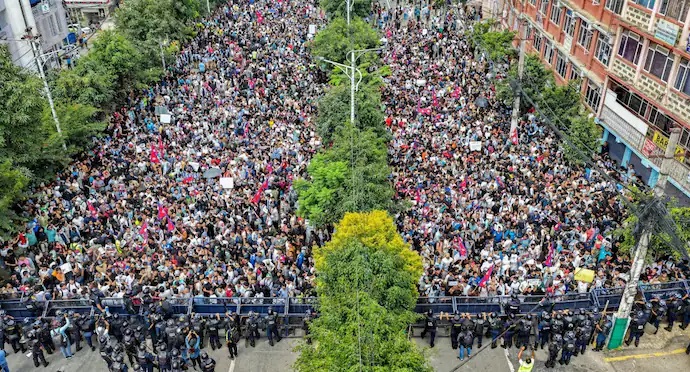
भदौ २३, २०८२ को दिन नेपाली युवापुस्ताले ऐतिहासिक शान्तिपूर्ण प्रदर्शनमार्फत आफ्नो आक्रोश र मागलाई सडकमा उतारे। देशका विभिन्न स्थानमा एकैसाथ आयोजित प्रदर्शनमा विशेष गरी राजधानी काठमाडौँ, पोखरा, विराटनगर, भरतपुर, नेपालगन्ज लगायतका प्रमुख सहरहरूमा युवाको ठुलो सहभागिता देखियो। विद्यालय र कलेजका विद्यार्थीदेखि लिएर रोजगार खोज्दै हिँडिरहेका युवासम्म सबैले आफ्नो असन्तोष खुलेर प्रकट गरे।
सुरुमा पूर्णतः शान्तिपूर्ण ढंगले सुरु भएको प्रदर्शनलाई राज्यद्वारा गरिएको कठोर दमनले रक्तपातमा परिणत गर्यो। सुरक्षा निकायले भीड नियन्त्रणका नाममा अश्रुग्याँस, पानीको फोहोरा, रबर गोली मात्र नभई कतिपय स्थानमा वास्तविक गोलीसमेत प्रयोग गरेको रिपोर्टहरू आएका छन्। यस घटनामा दर्जनौँ युवाको ज्यान गयो र सयौँ घाइते भए।
त्यसै गरी, शान्तिपूर्ण प्रदर्शनमा घुसपैठ गरी अराजकता र हिंसात्मक गतिविधि उक्साउने तत्त्वहरूको संलग्नता पनि देखियो। यसले आन्दोलनलाई कमजोर पार्ने र यसको वास्तविक स्वरलाई बदनाम गर्ने प्रयास भएको छ भन्ने प्रस्ट छ। तर व्यापक रूपमा जनताले प्रकट गरेको असन्तोष र युवाहरूको बलिदानलाई यसरी छायामा पार्न सकिँदैन।
आजको घटनाले स्पष्ट सन्देश दिएको छ कि युवापुस्ता अब मौन बस्दैनन्। उनीहरू आफ्नो भविष्य सुरक्षित गर्न, राष्ट्रलाई भ्रष्टाचारमुक्त बनाउन, सुशासन कायम गर्न, र आत्मनिर्भरता स्थापित गर्न सङ्घर्षरत छन्। यो घटना केवल दुःखद त्रासदी मात्र होइन; यो आगामी पुस्तालाई चेतावनी र अवसर दुवै हो। अबको बाटो युवाको आवाजलाई सुन्ने, सम्बोधन गर्ने, र व्यावहारिक सुधार गर्ने दिशामा मोडिनु पर्ने आवश्यकता स्पष्ट भएको छ।
आवश्यकता
आजको युवा आन्दोलन कुनै आकस्मिक विस्फोट होइन। यो लामो समयदेखि सञ्चित असन्तोषको स्वाभाविक प्रतिक्रिया हो। यसले राष्ट्रलाई स्पष्ट सन्देश दिएको छ। नेपाल अब यथावत् ढाँचामा चल्न सक्दैन। विगत शताब्दीभरको राजनीतिक उतारचढावले केही आधारभूत संरचना निर्माण गरे तापनि सुशासन, पारदर्शिता, नीति निरन्तरता र दीर्घकालीन रणनीतिक दृष्टिकोणको अभावले तिनलाई स्थायित्व दिन सकेन।
नेपालका युवाहरू अवसरको खोजीमा निरन्तर विदेश पलायन भइरहेका छन्। यसले परिवार बिछोड, सामाजिक असन्तुलन, पुँजी र सीप पलायनलाई बढाएको छ। कृषि, उद्योग, पर्यटन, शिक्षा र स्वास्थ्य जस्ता राष्ट्रको मेरुदण्ड ठानिनुपर्ने क्षेत्रहरूमा कमजोरीले देशलाई आयात–निर्भर अर्थतन्त्रतर्फ धकेलेको छ। आत्मनिर्भर उत्पादन, आन्तरिक रोजगारी र सन्तुलित सामाजिक संरचना कमजोर बन्दै गएको छ।
यस पृष्ठभूमिमा सुधार अब वैकल्पिक नभई अपरिहार्य बनेको छ। सुधारका आवश्यकता बहु आयामिक छन्:
- सुशासन र पारदर्शिता: भ्रष्टाचार नियन्त्रण, नीतिगत स्थायित्व, सार्वजनिक संस्थाको स्वायत्तता र डिजिटल सुशासनको कार्यान्वयन।
- रोजगारी सिर्जना र युवा सशक्तीकरण: उत्पादन–मुखी उद्योग, कृषि आधुनिकीकरण, प्राविधिक शिक्षा, स्टार्टअप प्रोत्साहन र सीप–आधारित रोजगार।
- शिक्षा र स्वास्थ्य सुधार: रोजगार–उन्मुख शिक्षा प्रणाली, ग्रामीण क्षेत्रमा गुणस्तरीय स्वास्थ्य सेवा, शहरी क्षेत्रमा सुव्यवस्थित र पहुँचयोग्य स्वास्थ्य संरचना।
- आर्थिक आत्मनिर्भरता: नेपालमै उपलब्ध उत्पादनलाई प्राथमिकता, अनावश्यक आयात बन्द, किसान र घरेलु उद्योगलाई संरक्षण, निर्यात–मुखी अर्थतन्त्रको विकास।
- पूर्वाधार विकास: भूगोल–अनुकूल यातायात, ऊर्जा, सञ्चार र स्मार्ट पूर्वाधारमा दीर्घकालीन लगानी।
- सामाजिक न्याय र समान अवसर: महिला, दलित, आदिवासी, अल्पसङ्ख्यक र सबै वर्गलाई समान अवसर सुनिश्चित गर्ने।
त्यसैले, आजको आन्दोलन केवल असन्तोषको अभिव्यक्ति मात्र होइन; यो राष्ट्रलाई भ्रष्टाचारमुक्त शासन, आत्मनिर्भर अर्थतन्त्र, रोजगारीमूलक सामाजिक संरचना र युवा–केन्द्रित अवसरहरू निर्माण गर्नुपर्ने अपरिहार्य आवश्यकता तर्फ निर्देशित सामूहिक आवाज हो।
महत्त्व
आजको युवा आन्दोलन केवल असन्तोषको अभिव्यक्ति मात्र होइन, यो राष्ट्रलाई नयाँ दिशातर्फ डोर्याउने ऐतिहासिक अवसर हो। यसले दशकौँदेखि सञ्चित पीडा र अन्यायलाई राष्ट्रिय बहसको केन्द्रमा ल्याएको छ।
यस आन्दोलनको पहिलो महत्त्व युवाको भूमिकालाई स्पष्ट रूपमा स्थापित गर्नु हो। राष्ट्रको मेरुदण्ड मानिने युवापुस्ता लामो समयसम्म मौन सहनशील रहे, तर अहिले उनीहरूले आफूलाई परिवर्तनको नेतृत्वदायी शक्तिका रूपमा प्रस्तुत गरेका छन्। यसले आगामी राजनीतिक, सामाजिक र आर्थिक रूपान्तरणमा युवाको सहभागिता अपरिहार्य भएको देखाउँछ।
दोस्रो, यस आन्दोलनले सुशासन, पारदर्शिता र जबाफदेहिताको अभावलाई उजागर गरेको छ। दशकौँसम्म भ्रष्टाचार र दुरुपयोगले संस्थागत संरचना कमजोर बनाउँदै लगेको थियो, तर अहिले युवाको आवाजले तिनै कमजोरीलाई मूल एजेन्डा बनाइदिएको छ। यसले नीति–निर्माताहरूलाई अब दीर्घकालीन दृष्टिकोण र संरचनागत सुधार नगरी बच्ने ठाउँ नरहेको देखाएको छ।
तेस्रो, यस आन्दोलनले आत्मनिर्भरता र स्थानीय उत्पादनको महत्त्वलाई जोड दिएको छ। नेपालजस्ता प्राकृतिक स्रोत सम्पन्न मुलुकले आयात–निर्भर अर्थतन्त्र धान्न नसक्ने कुरा स्पष्ट भएको छ। स्थानीय उत्पादनलाई संरक्षण गर्ने, बजार व्यवस्थापन सबल बनाउने र किसान तथा घरेलु उद्योगलाई प्रोत्साहन गर्ने आवश्यकता अब केवल नीतिगत बहसमा सीमित नभई सडकमा उच्च आवाजका साथ प्रस्तुत भएको छ।
चौथो, यो आन्दोलनले सामाजिक न्याय र समान अवसरलाई राष्ट्रिय प्राथमिकता बनाउन प्रेरित गरेको छ। शिक्षा, स्वास्थ्य, रोजगारी र नेतृत्वमा सबै वर्ग, महिला, दलित, आदिवासी, अल्पसङ्ख्यक र ग्रामीण समुदायलाई समान अवसर सुनिश्चित नगरी देश स्थिर र समृद्ध बन्न सक्दैन भन्ने सन्देश प्रस्ट भएको छ।
यसरी, आजको युवा आन्दोलनको महत्त्व बहु आयामिक छ—यसले परिवर्तनको आवश्यकता मात्र होइन, परिवर्तन सम्भव छ भन्ने विश्वासलाई पनि पुनर्जीवित गरेको छ। यस आन्दोलनले इतिहासमा नयाँ अध्याय खोल्दै नेपाललाई सुशासन, आत्मनिर्भरता, समान अवसर र दीर्घकालीन स्थायित्वतर्फ डोर्याउने ऐतिहासिक मञ्च तयार गरेको छ।
अबको कदम
आजको आन्दोलनले दिएको सन्देश स्पष्ट छ अब पुरानै ढर्राले देश चलाउन सकिँदैन। युवापुस्ताले उठाएका माग र असन्तोषलाई गम्भीरतापूर्वक सम्बोधन नगरी मुलुकलाई दीर्घकालीन स्थायित्व र समृद्धितर्फ लैजान सकिँदैन। त्यसैले अबका कदमहरू यथार्थपरक, शान्तिपूर्ण र संस्थागत सुधारतर्फ उन्मुख हुन आवश्यक छ।
सबैभन्दा पहिले, सरकार र राजनीतिक दलहरूले युवासँग प्रत्यक्ष संवाद सुरु गर्नुपर्छ। आन्दोलनलाई केवल सुरक्षा दृष्टिकोणबाट हेर्ने होइन, बरु राष्ट्रिय नीति र दीर्घकालीन रणनीतिमा उनीहरूको आवाजलाई समेट्ने समय आएको छ।
दोस्रो, सुरक्षा संयन्त्रले बल प्रयोग नगरी संवेदनशील ढंगले आन्दोलनलाई सम्बोधन गर्नुपर्छ। युवाको आक्रोशलाई शत्रु होइन, राष्ट्रिय सुधारको प्रेरणा मानिनुपर्छ।
तेस्रो, तात्कालिक कदम स्वरूप सामाजिक सञ्जाल प्रतिबन्ध हटाई अभिव्यक्तिको स्वतन्त्रता सुनिश्चित गर्नुपर्छ। सरकारले भनेजस्तै, केही प्लेटफर्महरूले नेपालको कानुन र मार्ग निर्देशन पूरा नगरी, स्थानीय दर्ता नगरी सञ्चालन गरेका थिए भन्ने कुरा सम्बोधन गर्न आवश्यक छ। तर नागरिकको स्वतन्त्र अभिव्यक्तिलाई सीमित गर्नु समाधान होइन। त्यसैले सरकारले नेतृत्वदायी भूमिका खेल्दै ती कम्पनीहरूको मुख्यालयसँग प्रत्यक्ष संवाद गर्नुपर्छ, नेपालमा दर्ता प्रक्रिया सम्पन्न गर्न लगाउनुपर्छ, र राष्ट्रिय तथा अन्तर्राष्ट्रिय मापदण्डअनुसार अपराध नियन्त्रणका उपायहरू लागू गर्नुपर्छ। तर यी सबै प्रक्रिया नागरिकको स्वतन्त्रता र अभिव्यक्तिको अधिकारलाई कुण्ठित नगरी सम्पन्न गर्नुपर्छ।
चौथो, स्वतन्त्र अनुसन्धान आयोग गठन गरी मृतक र घाइतेहरूको न्याय सुनिश्चित गर्नुपर्छ। यसले राज्यप्रति नागरिकको विश्वास पुनः स्थापित गर्ने महत्त्वपूर्ण भूमिका खेल्नेछ।
पाँचौँ, रोजगारी, शिक्षा र स्वास्थ्यसँग सम्बन्धित आपत्कालीन कार्यक्रम तुरुन्तै कार्यान्वयन गर्नुपर्छ। युवालाई आफ्नै देशमा भविष्य सुरक्षित गर्ने वातावरण दिन नसकेसम्म पलायन रोक्न सकिँदैन, र निरन्तरको परिवार बिछोडले नागरिकको असन्तोष कहिल्यै समाप्त हुन सक्दैन।
छैटौँ, हाल चलिरहेको ठुला भ्रष्टाचार प्रकरणहरूको छिटो अनुसन्धान सम्पन्न गरी, संलग्न ठुला राजनीतिक दलका ठुला नेतादेखि संलग्न सबै तहका पदाधिकारीहरूमाथि कडा कानुनी कारबाही गर्नुपर्छ। यसले मात्र राजनीतिक शुद्धीकरणप्रति विश्वास पुनर्स्थापित गर्न सक्छ।
सातौँ, राष्ट्रिय पुनर्संरचना दृष्टि २१०० (वि.सं.) लाई औपचारिक रूपमा राष्ट्रिय एजेन्डा बनाइनुपर्छ। यस दृष्टिकोणले सुशासन, पारदर्शिता, आत्मनिर्भरता, औद्योगिकीकरण, सामाजिक न्याय, समान अवसर, दीर्घकालीन पूर्वाधार विकास र युवामुखी अवसर सिर्जना गर्ने खाका तय गर्नुपर्नेछ।
अन्ततः, अबको कदम केवल अल्पकालीन शान्ति स्थापना होइन; यो दीर्घकालीन राष्ट्रिय पुनर्संरचनाको आधारशिला बन्नुपर्छ। युवाको बलिदान र आवाजलाई वास्तविक सुधार र परिवर्तनमा रूपान्तरण गर्न सकिएन भने आजको त्रासदी भोलिको अझ ठुलो सङ्कटको कारक बन्नेछ।
September 8, 2025
I extend heartfelt condolences to the youths who lost their lives during today’s Gen-Z demonstrations against the mismanagement of the state, and I wish a speedy recovery to all who were injured. I express deep regret and strong condemnation of the severe repression carried out by the state against peaceful protesters, which resulted in dozens of deaths and hundreds of injuries. Likewise, I strongly denounce those elements who infiltrated the peaceful movement to incite violence and disorder, as well as the political forces who encouraged them. This is not merely a movement; it is a historic turning point connected to the nation’s future and very existence, and I urge all sides to take the voice of the youth seriously and respond accordingly.
BackgroundOver the past one hundred years, Nepal has undergone several phases of political change: the end of the Rana regime and the advent of democracy in 1951 (2007 B.S.), the subsequent instability, the Panchayat system, the restoration of multiparty democracy in 1990 (2046 B.S.), the armed conflict and peace process (1996–2006 / 2052–2063 B.S.), the declaration of the republic, and the promulgation of the federal constitution in 2015 (2072 B.S.). However, these transformations did not translate into the expected socio-economic progress. As a result, citizens – particularly the youth – were gradually pushed from disappointment into anger.
During the Panchayat era – especially under King Mahendra – several state-led initiatives for development and self-reliance laid the foundation for modernization. Institutions directly connected to daily life and self-sufficiency were established. The Agricultural Inputs Corporation and the Agricultural Development Bank expanded access to seeds, fertilizers, irrigation materials, and credit. The Nepal Food Corporation played a role in food security and price stabilization. Sajha Yatayat, Rastriya Banijya Bank, national insurance and trading institutions, National Trading Limited, and Salt Trading Corporation stabilized supply chains. Nepal Airlines Corporation expanded both domestic and international connectivity. The Hetauda and Balaju industrial estates created employment opportunities based on production. Factories such as Birgunj Sugar Mill, Biratnagar Jute Mill, Hetauda Textile (cloth), Bansbari Leather and Shoe Factory, Gorakhkali Rubber Industry, and the Janak Education Materials Centre – related to clothing, footwear, tires, agriculture, education, and supply – showed strong potential to strengthen daily life and national self-reliance. In transport infrastructure, the electric trolley bus, the Dhorsing–Kathmandu cargo ropeway, and the Hetauda–Kathmandu ropeway demonstrated geography-friendly, environmentally sound, and sustainable models of access.
However, after the restoration of multiparty democracy in 1990 (2046 B.S.), the expected good governance and long-term strategic vision did not emerge. Instead, lack of policy continuity, misuse of institutions, unstructured privatization, political interference, and widespread corruption became dominant. Many productive public industries collapsed – not through reform but due to haphazard privatization, unhealthy competition, and lack of policy consistency. Policies to prioritize domestic production in agriculture, industry, and services weakened, and the country moved toward an import-dependent economy.
As the education system failed to become practical and employment-oriented, and health services remained weak in rural areas and expensive/disorganized in urban areas, social inequality increased. Large numbers of youths in their productive years were compelled to migrate abroad for higher education or employment. This intensified family separation, social imbalance, and capital/skills flight. At the same time, weak agricultural value chains, poor market management, and lack of protection for local products meant that even goods abundantly available within Nepal were dominated by imports. This trend demoralized farmers, domestic industries, and small entrepreneurs.
It is upon these deep-rooted structural weaknesses that today’s youth movement has arisen. The recent social media ban is only a spark. The root problem lies in the absence of good governance, transparency, institutional autonomy, and economic policies that prioritize local production. The anger expressed on the streets today is, in fact, the accumulated reaction of youths against a century of distortions. Its central message is clear: corruption-free governance, prioritization of domestic production, quality access to essential services and infrastructure, and youth-centered opportunities.
Today’s IncidentOn Bhadau 23, 2082 (September 8, 2025), the young generation of Nepal took to the streets through a historic peaceful demonstration to express their outrage and demands. Simultaneous demonstrations were organized across the country, with particularly large participation seen in major cities including the capital Kathmandu, Pokhara, Biratnagar, Bharatpur, and Nepalgunj. From school and college students to youths searching for employment, everyone openly voiced their dissatisfaction.
What began as a completely peaceful protest turned into bloodshed due to severe repression by the state. Security forces, under the pretext of crowd control, reportedly used tear gas, water cannons, and rubber bullets, and in some places even live ammunition. This resulted in the deaths of dozens of youths and injuries to hundreds more.
Similarly, there was also the involvement of elements who infiltrated the peaceful demonstrations to incite chaos and violent activities. It is clear that this was an attempt to weaken the movement and tarnish its genuine character. However, the widespread public discontent and the sacrifices made by the youth cannot be overshadowed in this way.
Today’s incident has sent a clear message that the young generation will no longer remain silent. They are struggling to secure their future, to build a corruption-free nation, to establish good governance, and to achieve self-reliance. This incident is not only a tragic calamity; it is both a warning and an opportunity for future generations. The path ahead must now turn toward listening to the voices of the youth, addressing their concerns, and implementing practical reforms.
NecessityToday’s youth movement is not an accidental outburst. It is a natural response to long-accumulated frustration. It has delivered a clear message to the nation: Nepal can no longer continue in its existing framework. Despite some basic structural achievements over the past century of political upheavals, the lack of good governance, transparency, policy continuity, and long-term strategic vision has prevented those achievements from becoming sustainable.
Nepali youths are continuously migrating abroad in search of opportunities. This has intensified family separation, social imbalance, and the flight of capital and skills. Weaknesses in agriculture, industry, tourism, education, and health – sectors that should have been considered the backbone of the nation – have pushed the country toward an import-dependent economy. Self-reliant production, domestic employment, and a balanced social structure have all been weakened.
Against this backdrop, reform is no longer optional but has become imperative. The areas of reform are multidimensional:
Good governance and transparency: control of corruption, policy stability, autonomy of public institutions, and implementation of digital governance.
Employment generation and youth empowerment: production-oriented industries, modernization of agriculture, technical education, promotion of startups, and skill-based employment.
Education and health reform: employment-oriented education system, quality health services in rural areas, and organized and accessible health facilities in urban areas.
Economic self-reliance: prioritization of domestically available products, prohibition of unnecessary imports, protection of farmers and domestic industries, and development of an export-oriented economy.
Infrastructure development: long-term investment in geography-friendly transport, energy, communications, and smart infrastructure.
Social justice and equal opportunity: ensuring equal opportunities for women, Dalits, indigenous groups, minorities, and all communities.
Therefore, today’s movement is not merely an expression of discontent; it is a collective voice directing the nation toward the imperative need for corruption-free governance, a self-reliant economy, an employment-oriented social structure, and youth-centered opportunities.
SignificanceToday’s youth movement is not merely an expression of discontent; it is a historic opportunity to steer the nation toward a new direction. It has brought decades of accumulated pain and injustice to the center of the national discourse.
The first significance of this movement is the clear establishment of the role of youth. Considered the backbone of the nation, the younger generation remained silently tolerant for a long time, but now they have positioned themselves as the leading force of change. This demonstrates that youth participation is indispensable in forthcoming political, social, and economic transformations.
Second, this movement has exposed the absence of good governance, transparency, and accountability. For decades, corruption and misuse eroded institutional structures, but now the voices of youth have placed those very weaknesses at the forefront of the national agenda. It has shown policymakers that there is no longer room to avoid long-term vision and structural reform.
Third, this movement has emphasized the importance of self-reliance and local production. It has become clear that a resource-rich country like Nepal cannot sustain an import-dependent economy. The need to protect domestic products, strengthen market management, and promote farmers and local industries is now being raised not only in policy debates but loudly and clearly on the streets.
Fourth, this movement has inspired the nation to make social justice and equal opportunity a national priority. The message is clear: without ensuring equal access in education, health, employment, and leadership for all groups – women, Dalits, indigenous peoples, minorities, and rural communities – the country cannot achieve stability and prosperity.
Thus, the significance of today’s youth movement is multidimensional – it has revived not only the necessity of change but also the belief that change is possible. This movement has opened a new chapter in history, preparing a historic platform to guide Nepal toward good governance, self-reliance, equal opportunity, and long-term stability.
The Way Forward
Today’s movement has delivered a clear message – Nepal can no longer continue in its old ways. Without seriously addressing the demands and grievances raised by the youth, the country cannot move toward long-term stability and prosperity. Therefore, the steps ahead must be realistic, peaceful, and directed toward institutional reforms.
First, the government and political parties must initiate direct dialogue with the youth. The movement should not be viewed solely through a security lens; rather, it is time to incorporate their voices into national policy and long-term strategy.
Second, security agencies must address the demonstrations sensitively, without the use of excessive force. The anger of the youth should not be seen as an enemy but as an inspiration for national reform.
Third, as an immediate measure, the ban on social media should be lifted to guarantee freedom of expression. The government has stated that some platforms operated without fulfilling Nepal’s laws and guidelines, including local registration. While these issues must indeed be addressed, limiting citizens’ freedom of expression is not the solution. The government must take a leadership role by engaging directly with the headquarters of these companies, ensuring their registration in Nepal, and requiring them to comply with national and international standards for crime prevention – without curtailing citizens’ freedom of speech and expression.
Fourth, an independent investigation commission must be formed to ensure justice for those killed and injured. This will play a crucial role in restoring public trust in the state.
Fifth, emergency programs related to employment, education, and healthcare must be implemented immediately. Unless an environment is created where young people can secure their future within their own country, outmigration cannot be stopped, and the continuous separation of families will mean that public discontent can never be resolved.
Sixth, ongoing major corruption cases must be investigated with urgency, and strict legal action must be taken against all involved – ranging from senior leaders of major political parties to all officials connected with such cases. Only this can restore confidence in political purification.
Seventh, a National Reconstruction Vision 2100 (B.S.) must be formally adopted as a national agenda. This vision should outline a framework for good governance, transparency, self-reliance, industrialization, social justice, equal opportunity, long-term infrastructure development, and the creation of youth-centered opportunities.
Ultimately, the way forward is not merely about establishing short-term peace; it must serve as the foundation for long-term national reconstruction. If the sacrifices and voices of the youth are not transformed into genuine reforms and real change, today’s tragedy will become the cause of an even greater crisis tomorrow.

