विषयसूची / Table of Contents
ToggleTimely Meals, Quality Sleep, and Living in Harmony with Nature: The Scientific Foundation of a Healthy Life
Humanity has achieved extraordinary progress through science and technology. Artificial lighting has turned night into day, the internet has created a 24-hour world, and modern lifestyles have redefined our relationship with time. Yet one fundamental truth remains unchanged:
The human body still functions according to nature’s biological clock.
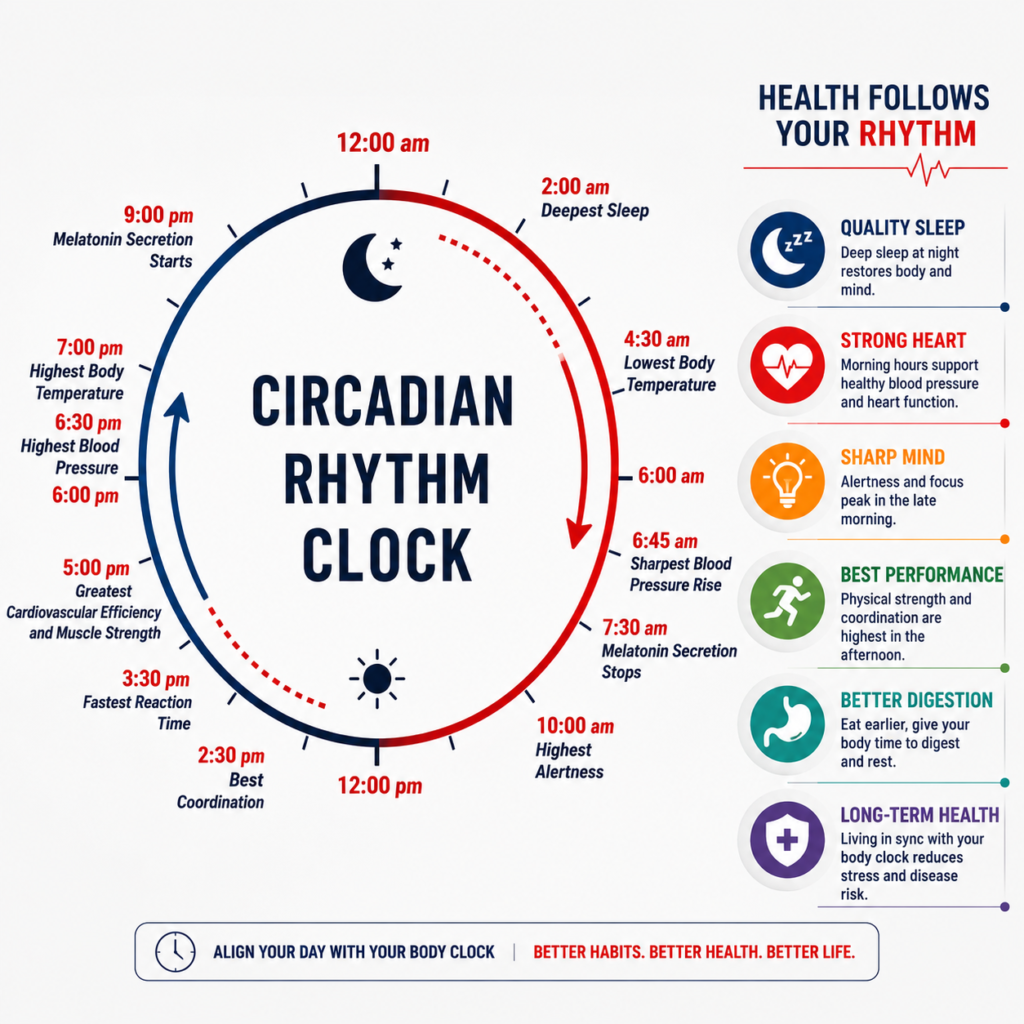
Our internal biological clock, known as the Circadian Rhythm, is the result of millions of years of evolution. It regulates when we feel hungry, when our body is most active, when hormones are released, and when we need sleep. This is why health experts consistently emphasize that good health begins not with medicine, but with a healthy daily routine.
Today, the global rise in obesity, diabetes, cardiovascular disease, hypertension, depression, chronic stress, sleep disorders, and declining productivity is increasingly linked to irregular eating habits and insufficient sleep. Modern medicine no longer considers these merely personal lifestyle choices—they are now recognized as major public health concerns.
1. What Happens When Our Biological Clock Is Disrupted?
Throughout the day, our body remains active. As evening approaches, it naturally begins preparing for rest.
With sunset, the body gradually increases the production of melatonin, the hormone responsible for regulating sleep. Eating late at night, prolonged exposure to bright artificial light, or staying awake until the early hours interferes with this natural rhythm.
When these habits become routine, they begin to affect digestion, blood sugar regulation, hormonal balance, and the body’s natural repair mechanisms.
Research from Harvard Medical School, the American Academy of Sleep Medicine (AASM), and journals such as Nature Reviews Endocrinology has consistently shown that irregular meal timing and inadequate sleep are associated with obesity, Type 2 diabetes, cardiovascular disease, and metabolic syndrome.
2. Why Is Sleep More Powerful Than Medicine?
Sleep is not simply a period of rest—it is the body’s most important recovery process.
During sleep, the brain organizes information collected throughout the day, strengthens memory, repairs damaged cells, activates the immune system, and regulates the biological processes that reduce stress and restore physical and mental health.
According to the World Health Organization (WHO) and the National Sleep Foundation, chronic sleep deprivation may lead to:
- Impaired memory
- Reduced concentration and decision-making ability
- Increased irritability and stress
- Anxiety and depression
- Weakened immune function
- Higher risk of accidents and injuries
- Increased long-term risk of heart disease, diabetes, and obesity
Many people seek medical treatment only after their health begins to deteriorate. Yet adequate sleep is itself one of nature’s most effective therapies—and it comes at no financial cost.
3. Today’s Sleep Shapes Tomorrow’s Generation
A child’s brain develops rapidly during the early years of life. During this critical period, sufficient sleep and a consistent daily routine play a vital role in cognitive, emotional, and physical development.
According to the American Academy of Pediatrics (AAP), children who consistently sleep late are more likely to experience:
- Difficulty concentrating in school
- Poor learning performance
- Irritability and behavioral problems
- Increased risk of obesity
- Reduced immunity
- Lower participation in sports and creative activities
The disciplined habits children develop today become the foundation of their future health, character, and success.
4. Why Is It Equally Important for Adults and Older Adults?
Busy work schedules, social commitments, and digital lifestyles have made late-night meals and delayed bedtimes increasingly common among adults.
These habits directly affect productivity, leadership, emotional regulation, decision-making, and overall work performance.
For older adults, quality sleep becomes even more important. Healthy sleep supports memory, helps regulate blood pressure, improves cardiovascular health, and enables greater independence in daily life.
5. This Is Not Only a Health Issue—It Is a Social Issue
The consequences of an irregular lifestyle extend far beyond personal health.
Waking up late often leads to poor time management. Workplace productivity declines. Students struggle academically. Family routines become inconsistent, and participation in social activities decreases.
Healthy families build healthy communities.
Therefore, maintaining regular meal times and sufficient sleep is not merely a personal choice—it is a social responsibility.
6. Why Does Health Decline When We Drift Away from Nature?
For thousands of years, human life naturally followed the rhythm of the sun—waking with sunrise and resting after sunset.
Today, artificial lighting, smartphones, social media, television, and irregular work schedules constantly challenge our biological clock.
Although technology has transformed our world, our bodies still obey the laws of nature.
That is why modern medical science continues to emphasize regular routines, exposure to natural morning light, timely meals, adequate sleep, and daily physical activity as the cornerstones of long-term health.
Five Simple Rules for a Healthier Life
- Eat your evening meal at least 2–3 hours before bedtime.
- Whenever possible, go to bed before 10:00 PM.
- Wake up around sunrise and expose yourself to natural morning light.
- Reduce the use of mobile phones, televisions, and other screens at least one hour before bedtime.
- Maintain a consistent sleep and wake schedule every day, including weekends.
Recommended Sleep Duration by Age
| Age Group | Recommended Bedtime | Recommended Wake-Up Time | Daily Sleep |
|---|---|---|---|
| 6–12 years | 8:00–9:00 PM | 6:00–7:00 AM | 9–12 hours |
| 13–18 years | 9:00–10:00 PM | 6:00–7:00 AM | 8–10 hours |
| 18–64 years | 9:30–10:30 PM | 5:30–6:30 AM | 7–9 hours |
| 65 years and above | 9:00–10:00 PM | 5:30–6:30 AM | 7–8 hours |
Note: These recommendations are based on international sleep guidelines and the principles of human circadian rhythm. Individual requirements may vary depending on health conditions, occupation, or medical advice.
Conclusion
Good health does not begin with expensive medicines, sophisticated medical equipment, or luxurious lifestyles.
It begins with timely meals, adequate sleep, regular physical activity, and daily habits that are aligned with nature.
The greatest legacy we can leave to future generations is not wealth alone, but a healthy way of living.
Health is often appreciated only after it is lost. Yet the small disciplines we practice each day can protect our physical and mental well-being for a lifetime.
We should learn to follow nature—not merely the clock. Waking with the sunrise and allowing the night to become a time of rest is one of the simplest yet most powerful habits for achieving longevity, mental well-being, and a healthier family.
References
- World Health Organization (WHO)
- American Academy of Sleep Medicine (AASM)
- American Academy of Pediatrics (AAP)
- National Sleep Foundation
- Harvard Medical School – Division of Sleep Medicine
- Nature Reviews Endocrinology
- The Lancet
- JAMA
- Sleep (Oxford Academic)

